Ryan Rector, Ph.D., Director of Crop Protection – A Conversation on Formulation Innovation for Drone Spray Applications
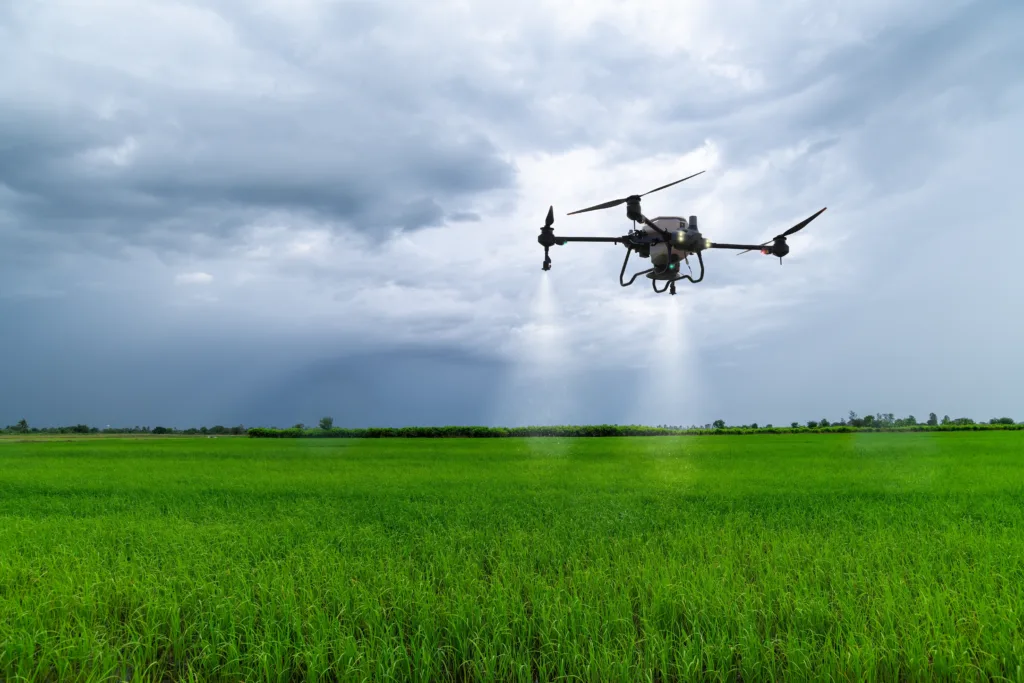
Across the industry, everything is advancing from equipment manufacturers making drones larger, faster, and more efficient, to ongoing research into pesticides, adjuvants and overall application performance. This isn’t a “wild west” space; there’s real science behind it. Different crops require different approaches and understanding how all those pieces fit together is essential. At AU Solutions, we’re heavily invested in this technology and research, working to better understand how our adjuvants interact with evolving drone systems to support effective, consistent applications.
Are most retailers offering drone spray applications for pesticides now? Are they also offering applications for fertilizer, food and other inputs as well?
There is an increase in the number of drones used by retailers. The industry continues to grow because they’re seeing the benefit of drone spray applications. While drones are widely used for insecticide and fungicide applications, several herbicides are also applied with drones. In addition, foliar fertilizers applied later in the season represent another new segment of the market that is experiencing steady growth.
Which growers use drone applications? Do large growers turn to aerial applicators to cover ground more quickly, or are they more likely to use drones because they’ve invested in the tools of precision agriculture? Are smaller farms using them as well? Do they use them in a more general way or are they deploying precision ag as well?
It depends. Some large growers rely on drones simply because they don’t have access to aerial applicators in their area, so drones become their most practical option. We do see some large growers using drones, but it’s often the small‑ to medium‑sized farmers who rely on them more. They typically manage fewer acres, making drone use easier to integrate into their operations. Their fields also tend to be smaller or irregularly shaped, which makes drones a practical fit.
How have the products used in spray drones changed over time? Did they start out using the same substances used by planes or personal applicators, or have they always been more concentrated?
When drones first entered the application market, the biggest question was which adjuvants or drift reduction agents (DRAs) to use. Early on, people relied on products designed for airplanes or even ground rigs simply because there was no drone‑specific guidance. That’s changed in recent years as companies have begun conducting more research. We’re now researching which adjuvants make sense for drone applications, which can differ significantly from what works best in airplanes or ground equipment.
The market is shifting toward more research to identify products that fit drone applications. Drone technology is changing rapidly and directly affects adjuvant selection with new models that are larger, faster and use different spray systems. For AU Solutions, rapid drone advancements create opportunities to refine and optimize how our adjuvants perform with each new generation of drones and application technologies.
What are the most important advancements being made right now in these formulations, and are they expected to increase the share of growers using spray drones?
As research develops, we’re learning more about the limitations drones face, such as small tank size and lack of agitation compared to airplanes or ground rigs. With less volume and limited mixing capability, compatibility, defoaming, drift control and overall tank stability become much more important. Current research focuses on improving how all the products in that smaller tank work together and delivering performance in a compact package that drones can carry.
Are drone products being customized to the needs of specific growers or fields?
Most drone‑applied products are formulated to work broadly. The industry is largely focused on ensuring compatibility with drone spray systems for droplet size and drift control, rather than creating field‑specific or grower‑specific formulations.
Are advances in drone technology affecting the kind of products that can be made for them or the amount that can be dispensed from them?
The drone market is changing quickly. Early models carried only 3–5 gallons, but newer drones are larger, faster, have more efficient battery systems and can now handle 40–60 gallons. That increased capacity influences which adjuvants they can use and gives operators more volume. With bigger tanks and longer flight times, drones can now cover more acres per load, making them far more practical and appealing for growers to own and operate.
About AU Solutions: As a leader in formulation services, AU Solutions brings together a team of industry experts with over 100 years of combined formulation experience. AU Solutions has sophisticated laboratory facilities in Tennessee and Oklahoma and offers extensive support through cutting-edge research and development initiatives aimed at improving the performance of products in the agricultural industry.